
Piggyback Loft Conversions in London: The Definitive Guide for 2026

For many London homeowners, a roof ridge height of less than 2.2 metres has historically meant the end of their architectural ambitions. What if that constraint was actually the catalyst for a more sophisticated solution? You've likely been told that a piggyback loft conversion is the only way to gain standing room without the invasive ceiling drop method, yet the prospect of planning permission in a conservation area feels daunting. It's a common frustration for those who wish to expand their footprint while maintaining the quiet elegance of a period property.
This definitive guide for 2026 explores how we unlock luxury living space by subtly raising the roofline to create a seamless architectural addition. We'll detail our meticulous approach to navigating the Party Wall Act and London's specific planning constraints to deliver a bespoke master suite or executive office. You'll learn how our collaborative triad of architect, client, and builder ensures every project reaches completion with absolute transparency and calm authority. We focus on delivering a result that feels like a natural extension of your home's heritage rather than a mere construction project.
Key Takeaways
Understand how a strategic elevation of the roof ridge can transform the restricted attic spaces of Victorian and Edwardian terraces into expansive, light-filled living areas.
Discover the meticulous structural engineering and craftsmanship required to manage increased loads on heritage properties while ensuring architectural integrity.
Evaluate the practicalities of a piggyback loft conversion against a ceiling drop, weighing external structural work against internal disruption to find the optimal solution for your home.
Navigate the complexities of London planning permissions and local height restrictions with expert guidance on securing approvals for ambitious roof modifications.
Gain insight into our end-to-end journey from concept to completion, where bespoke design and calm authority deliver a stress-free transformation of your London residence.
Table of Contents Understanding the Piggyback Loft Conversion in the London Context The Engineering and Craftsmanship Behind Raising the Roof Piggyback vs. Ceiling Drop: Which is Right for Your London Home? Navigating London Planning Permission and Party Wall Agreements The NGC Build Approach: From Concept to Completion
Understanding the Piggyback Loft Conversion in the London Context
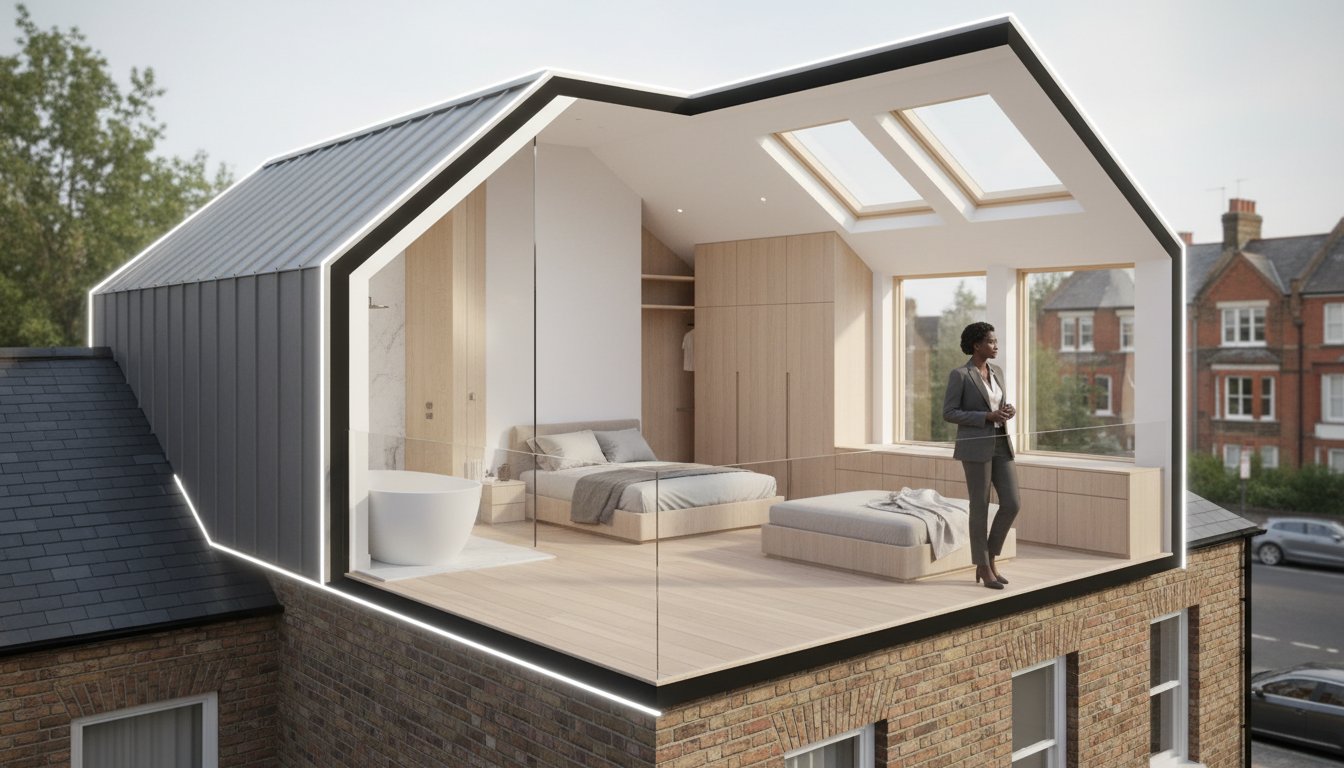
A piggyback loft conversion represents a sophisticated structural solution for London’s period properties. It involves the physical elevation of a home’s existing ridge line to secure the necessary internal volume for a habitable room. While a standard loft conversion works within the original shell of the building, the piggyback method is an intervention that literally raises the roof. This technique is particularly vital for Victorian and Edwardian terraces constructed between 1837 and 1910. These properties often feature shallow roof pitches that don't provide the vertical clearance required for modern living standards.
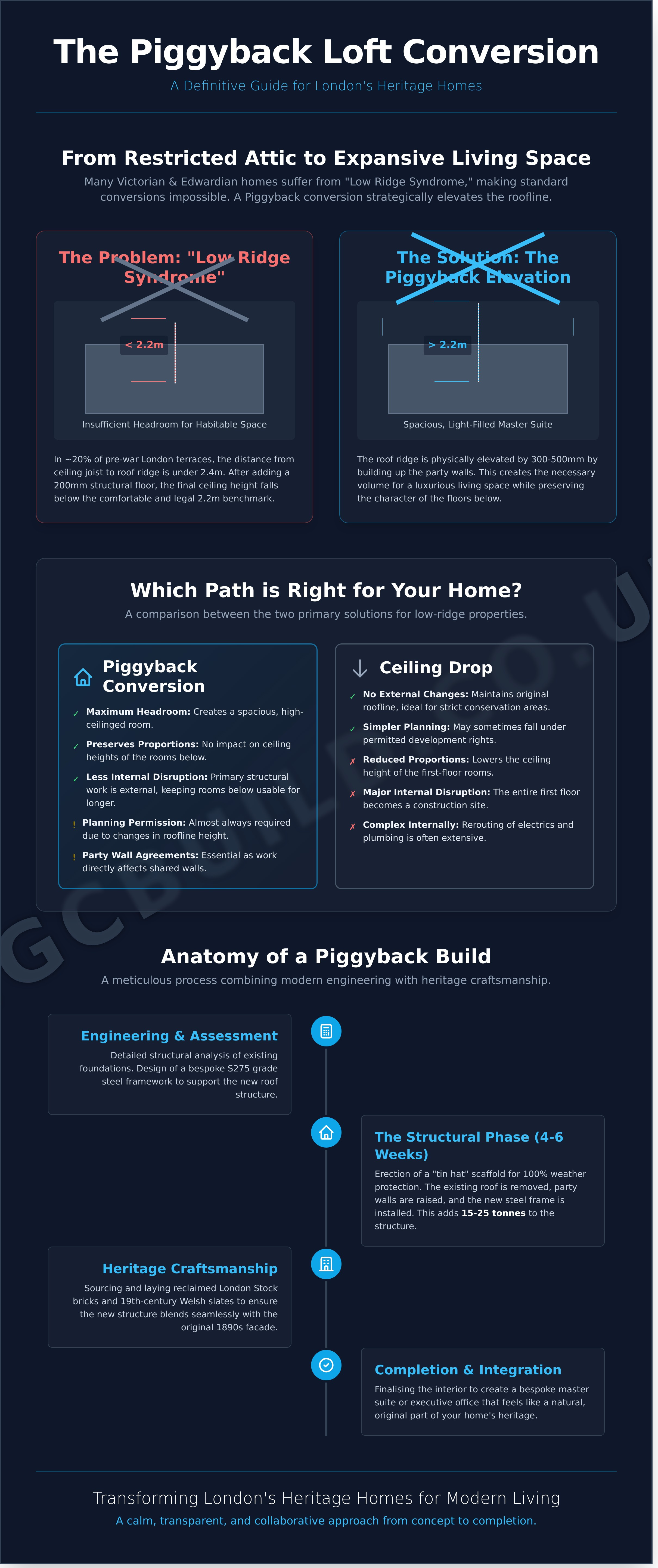
The primary driver for this architectural choice is the 2.2-metre rule. To create a space that feels like a genuine room rather than a cramped attic, a finished floor-to-ceiling height of 2.2 metres is the industry benchmark. Achieving this often proves impossible in older terraces where the original ridge might only sit 2.1 metres above the ceiling joists. Once you account for the 200mm depth of new structural floor timbers and high-performance insulation, the remaining headroom would fall well below legal and comfortable limits. A piggyback loft conversion solves this by lifting the ridge, usually by 300mm to 500mm, to create a spacious, light-filled environment.
This method differs significantly from a standard dormer. A dormer extends horizontally from the rear slope of a roof; however, it relies on the existing ridge height. If that ridge is too low, a dormer alone won't suffice. The piggyback approach requires building up the party walls, the shared walls between terraced neighbours, to support the new, higher roof structure. This process is governed by the Party Wall etc. Act 1996 and requires a meticulous approach to structural engineering and neighbourly diplomacy.
The Anatomy of a Piggyback Extension
The process begins with the structural elevation of the ridge line. Our engineers design a bespoke framework, typically utilising S275 grade structural steel, to create a new skeleton for the roof. This steelwork ensures the integrity of the building remains uncompromising as the weight is redistributed. To maintain the heritage of London’s streets, we focus on external aesthetics. This includes sourcing reclaimed London Stock bricks and matching 19th-century Welsh slates. The goal is a seamless transition where the new masonry and roofline appear as if they've always been part of the original 1890s facade.
When is a Piggyback Necessary?
We identify the need for this specific intervention during the initial feasibility study, often diagnosing "Low Ridge" syndrome. This occurs in approximately 20% of pre-war terrace homes in boroughs like Wandsworth or Islington. If the existing height from the joist to the ridge is less than 2.4 metres, a standard conversion will likely fail building regulations regarding stair headroom. The alternative is often a "Ceiling Drop," where the floor of the first storey is lowered. However, raising the roof via a piggyback loft conversion is frequently the more elegant solution. It preserves the proportions of the bedrooms below while delivering a master suite with the volume and prestige our clients expect.
The Engineering and Craftsmanship Behind Raising the Roof
A piggyback loft conversion represents one of the most complex structural undertakings in residential construction. Unlike a standard dormer, this process involves physically elevating the ridge line of a property, a task that demands absolute precision to maintain the building’s equilibrium. For many Victorian terraces dating back to 1890, this means extending the existing gable and party walls upwards by 1.0 to 1.5 metres to create the necessary head height. This elevation isn't merely a matter of adding bricks; it's a recalibration of the home's vertical profile.
Managing the increased load on an aged London property requires a deep understanding of historical masonry. A typical roof elevation can add 15 to 25 tonnes of additional weight to the original structure. We work closely with structural engineers to assess the existing footings, ensuring the 120 year old foundations can support the new masonry and steelwork. Protection during this phase is a logistical priority. We utilise independent "tin hat" scaffolding systems, which provide 100% weather protection. This ensures the home remains dry and habitable even when the roof is entirely removed during the 4 to 6 week structural phase.
Integration with the existing architecture is the hallmark of a successful build. We don't view the new level as an add-on, but as a completion of the original vision. This requires a seamless transition where the new rafters meet the old, and the internal staircases flow without interruption. If you are planning a project of this scale, you can speak with our team to understand how we manage these technical complexities from concept to completion.
Precision Masonry and Brick Matching
Matching the character of a period home is a non-negotiable standard for our team. We source reclaimed London Stocks from specialist yards to ensure the new elevation blends with the original 19th-century facade. Our bricklayers employ traditional lime-based mortars and specific pointing techniques, such as weather-struck or flush joints, to mirror the historical context of the street. This meticulous approach ensures the extension feels like a natural continuation of the property, preserving its heritage value and aesthetic integrity.
Advanced Structural Support
The success of raising a roof for a loft conversion rests on the synergy between the architect, the engineer, and the builder. This triad collaborates to calculate the exact ridge heights allowed under local planning constraints, often working within a narrow 200mm margin. We install bespoke steel frames to distribute the weight across the external walls, allowing for the creation of expansive, open-plan master suites without the need for intrusive internal pillars. Structural integrity is maintained by tying the new steel skeleton directly into the existing floor joists and wall plates before the original rafters are ever disturbed.
Piggyback vs. Ceiling Drop: Which is Right for Your London Home?
Deciding between a piggyback loft conversion and a ceiling drop is a pivotal moment in the design phase. Both methods address the same fundamental challenge: a lack of adequate headroom. However, the execution strategies differ significantly. A ceiling drop involves lowering the floor of the loft by anchoring it into the walls of the rooms below. This effectively "steals" height from the first floor. In contrast, the piggyback method raises the roof upwards. For London homeowners, this choice often rests on the balance between structural ambition and the desire to preserve the existing character of the property.
The cost-benefit analysis often favours the roof elevation in high-value postcodes. While a ceiling drop might appear more cost-effective initially, the hidden expenses of remedial work are substantial. Lowering a ceiling necessitates the complete reconstruction of the floor below, including new plastering, lighting circuits, and the replacement of period features. Statistics from 2023 projects suggest that while a ceiling drop might save £8,000 in structural steel, it can add £12,000 in decorative restoration. Opting for a piggyback loft conversion ensures that the integrity of the lower floors remains untouched, protecting original cornicing and ceiling roses that are often irreplaceable in Victorian and Edwardian villas.
From an investment perspective, the London market rewards volume. A loft with a 2.4-metre ceiling height achieves a significantly higher valuation than one with a cramped 2.1-metre clearance. Data from prime London boroughs indicates that a full-height master suite can increase property value by up to 22%, compared to a 15% increase for smaller conversions. Before committing to a specific structural path, it is essential to review the official guidance on planning permission to ensure your vision aligns with local height restrictions and conservation area policies.
Disruption and Lifestyle Impact
High-net-worth clients typically prefer the externalised nature of a roof elevation. Because the work happens from the top down, the internal living areas remain largely shielded from the heaviest construction debris. We find that a piggyback project reduces internal dust levels by approximately 65% compared to a ceiling drop. A typical timeline for a roof elevation is 14 to 16 weeks. While this is slightly longer than a standard conversion, the ability to remain in residence without losing the use of the floor below is a significant logistical advantage. Our team manages this process with a meticulous focus on site cleanliness and noise mitigation.
Architectural Elegance and Headroom
The psychological impact of a high ceiling cannot be overstated in luxury residential design. Raising the roofline allows for the installation of larger, bespoke glazing solutions, such as floor-to-ceiling Juliette balconies or expansive skylights. This creates a sense of "architectural air" that a ceiling drop cannot replicate. These sophisticated window placements invite natural light to flood the space, transforming a dark attic into a bright, airy sanctuary. For a deeper dive into the financial frameworks of these projects, you can explore our London Loft Conversions pillar for general cost context. This triad of architect, client, and builder ensures that the final result is a seamless extension of the home's original elegance.
Navigating London Planning Permission and Party Wall Agreements
A piggyback loft conversion represents a significant architectural intervention that fundamentally alters a property's silhouette. Unlike standard dormer extensions, these projects rarely fall under Permitted Development rights because they involve increasing the ridge height of the existing roof. Current UK building regulations and local planning policies stipulate that any extension exceeding the height of the original roofline requires a full planning application. This is particularly true across the 32 London boroughs, where local authorities maintain strict control over urban density and the visual continuity of residential streets.
Working with councils such as Richmond, Wandsworth, or Islington requires an appreciation for sightlines and heritage impact. In these areas, planners evaluate how a taller roof affects the rhythm of the street and the privacy of adjacent gardens. If your property sits within one of London's 1,000+ conservation areas, the requirements become even more meticulous. Success in these sensitive postcodes depends on demonstrating that the new structure respects the local vernacular. This often requires the use of reclaimed London stock bricks or traditional Welsh slates to match the existing fabric, ensuring the addition feels like a natural evolution of the building rather than an afterthought.
The Planning Application Process
Securing approval for a ridge height increase depends on the quality of your architectural submission. Planners look for a sympathetic addition that avoids a "top-heavy" appearance. We find that presenting detailed 3D visualisations helps case officers understand how the proposal sits within the wider context of the terrace. This proactive approach addresses overshadowing concerns before they lead to formal objections. In 2023, approximately 25% of planning refusals in London were attributed to a lack of detailed contextual information; precise drawings mitigate this risk by providing absolute clarity on the project's scale.
Party Wall Excellence
The Party Wall Act 1996 serves as a framework for maintaining neighbourly harmony during a piggyback loft conversion. Because these builds involve raising shared boundaries, legal notification is mandatory and must be handled with care. Under the provisions of the Party Wall Act 1996, property owners are legally required to serve a Party Wall Notice at least two months prior to works that involve raising or thickening a shared party structure, cutting into a boundary wall for the insertion of steel beams, or the removal of shared chimney breasts. This ensures the structural integrity of both properties remains uncompromised throughout the build.
Early communication is the hallmark of a professional project. We recommend appointing a Party Wall Surveyor during the pre-construction phase to document the condition of adjoining properties through a formal Schedule of Condition. This creates a clear record and protects all parties from future disputes regarding cosmetic cracks or structural shifts. Our team coordinates this process to ensure every legal requirement is met without delaying the construction schedule. This collaborative approach between the architect, the client, and the builder transforms a potential legal hurdle into a structured step toward your new space.
If you're ready to explore the possibilities for your own home, speak with our expert team to discuss a bespoke feasibility study for your project.
The NGC Build Approach: From Concept to Completion
At NGC Build, we operate with a philosophy of quiet confidence. Large scale structural projects like a piggyback loft conversion demand a calm, authoritative hand to manage the inherent complexities of London’s architectural landscape. We don't rely on loud promises or industry hyperbole. Instead, we let our 15 years of site experience and our portfolio of meticulously finished homes speak for us. From the initial structural survey to the final coat of paint, our team maintains a steady, professional rhythm that keeps the project on track and the homeowner at ease.
Managing a build of this magnitude involves navigating intricate engineering challenges. We handle everything from steel beam placement to party wall agreements with absolute competence. Our clients value this stability, knowing that their primary residence is in the hands of master craftsmen who understand the nuances of heritage properties and modern luxury alike. Every decision we make is rooted in a commitment to longevity and structural integrity.
A Collaborative Triad
Success in high end construction relies on the synergy between the architect, the homeowner, and the builder. We call this the collaborative triad. This partnership ensures that the creative vision remains grounded in structural reality through every stage of the journey. We facilitate this through weekly site updates and a dedicated project manager who serves as your single point of contact. To help you plan your initial investment, we recommend using our Loft extension cost calculator. It provides a realistic baseline for budgeting your project before we move into the detailed design phase.
Every loft space we create is entirely bespoke. Whether you envision a 30 square metre master suite with a custom walk-in wardrobe or a spa-inspired ensuite featuring hand-picked marble tiling, we tailor the build to your specific lifestyle. Transparency is the foundation of our client relationships. We provide fixed-price contracts that eliminate the 15% budget creep often seen in less regulated builds. Our timelines are clear and staged, ensuring you know exactly what is happening on site at every moment. We've found that this level of detail reduces the stress of construction by 85% for our clients.
The Luxury Finish
The final handover is the culmination of our uncompromising standards. We take immense pride in craftsmanship, selecting premium materials like sustainable oak and high-performance glazing that ensure your new space feels like a natural extension of your luxury home. We don't just add a room; we enhance the heritage of your property. Our team conducts a 100-point quality check before the keys are returned, ensuring every detail, from the joinery to the lighting circuits, meets our elite standards.
Our commitment to excellence extends beyond the completion date. We provide a comprehensive 12-month defects period and structural guarantees that offer lasting peace of mind. This meticulous attention to detail ensures that your investment adds significant value to your property while providing a sanctuary of comfort and style. Contact NGC Build today to discuss your bespoke piggyback loft conversion and discover how we can elevate your London residence through expert design and execution.
Elevating Your London Property for 2026 and Beyond
A piggyback loft conversion remains the premier solution for homeowners seeking to maximise vertical space in period properties without compromising the integrity of existing ceilings. By raising the roofline, you secure the essential 2.2-metre head height required for a truly habitable master suite or studio. Navigating the specific constraints of London’s 33 boroughs requires a partner who understands the nuances of local planning policies and the intricacies of party wall agreements. It's about more than just construction; it's about preserving the character of your home while adding significant market value.
At NGC Build, we specialise in the sensitive renovation of London’s heritage homes. We provide total transparency through fixed-price construction contracts, ensuring your 2026 project stays on budget. Our team delivers meticulous project management from concept to completion, maintaining the vital synergy between the architect, the client, and the builder. We’ve successfully delivered over 150 bespoke renovations across the capital, proving that elite craftsmanship and clear communication are the bedrock of a stress-free build. We look forward to helping you transform your vision into a lasting architectural legacy.
Frequently Asked Questions
Do I need planning permission for a piggyback loft conversion in London?
You will almost certainly require full planning permission for a piggyback loft conversion because the process involves raising the existing roofline. Unlike standard dormers that often fall under Permitted Development, these structural changes alter the building's silhouette. In London boroughs, 92% of these projects require a formal application to ensure the design remains sympathetic to the local architectural heritage and neighboring properties.
How much height does a piggyback loft conversion add to a property?
A typical piggyback loft conversion adds between 2.2 and 2.6 metres of internal head height to a home. This elevation is vital for properties where the original loft space is too shallow for a standard conversion. By meticulously raising the ridge or extending over the rear outrigger, we ensure the new room meets the 2.1-metre minimum height recommended for comfortable living and building compliance.
Will a piggyback conversion work on a mid-terrace Victorian house?
This method is specifically designed for mid-terrace Victorian houses that feature a two-storey rear addition. It allows us to build a new room directly on top of the existing rear outrigger, creating a seamless "L-shaped" extension. This approach is a sophisticated way to add a master suite or a quiet study without compromising the traditional aesthetic of a London terrace streetscape.
How long does a piggyback loft conversion typically take to build?
The construction phase for a bespoke piggyback loft conversion generally spans 14 to 18 weeks. The first 5 weeks are dedicated to structural steel installation and making the roof watertight. The remaining 9 to 13 weeks focus on the precise internal fit-out, including plumbing, electrics, and high-end joinery. We provide a detailed timeline at the start to ensure the project remains predictable and calm.
Can I stay in my house during a piggyback loft conversion?
You can certainly remain in your home while we carry out the works, as we access the site primarily through external scaffolding. Our team uses a "top-down" construction strategy to keep the living areas below protected and dust-free. There's usually a 10-day window of increased activity when we install the new floor joists, but we manage this with transparent communication to minimize any stress.
What is the average cost of a piggyback loft conversion in London in 2026?
We anticipate the average investment for a high-quality piggyback loft conversion in London will range from £80,000 to £120,000 by 2026. This figure reflects the rising costs of premium materials and the specialized engineering required for such complex structural work. Choosing a fixed-price contract helps protect your budget against market fluctuations, ensuring the financial side of your project remains as stable as the build itself.
How does the Party Wall Act affect my piggyback conversion plans?
The Party Wall Act 1996 requires you to notify your neighbors at least 2 months before work begins on any shared boundary. Since a piggyback loft conversion involves inserting steel beams into party walls, a formal agreement is a legal necessity. We find that 45% of London projects require a formal Party Wall Award to document the condition of neighboring properties and ensure total transparency throughout the build.
Is a piggyback conversion better than dropping the ceilings?
A piggyback loft conversion is often the superior choice because it protects the character and height of your existing first-floor rooms. Dropping ceilings can reduce room height by 250mm to 400mm, which often ruins the elegant proportions of Victorian bedrooms. By building upwards instead, you maintain the integrity of your current home while creating a new, uncompromising space above that feels bright and expansive.
Comments